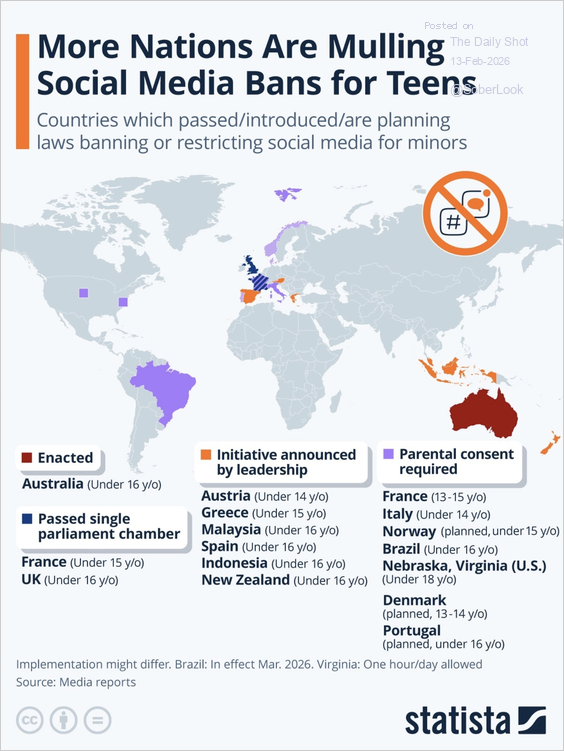
Durante el segundo congreso de CPA y MEGs de APDE el 31 enero pasado en el Club Italiano hubieron dos conferencistas, ambos de España. El primero dio a entender indirectamente que está bien que los adolescentes tengan telefono inteligente propio. Un par de horas despues, Geronimo, el segundo conferencista, dijo que era menos peligroso dar las llaves del automovil antes que el smartphone.
Para los papás no se trata de hacerla de “policías digitales”. Es que los datos comprueba que la “educacion equitativa” ante la tecnologia que sugiere la Unesco es irrelevante:
La pantalla para los papas (el varon) es el rival. En un ejercicio competitivo, se utiliza al rival y sus debilidades para obtener la victoria. Que la tecnologia sea el rival del papa significa que hay que tener un juicio discriminatorio de lo que promueve la unión en familia, poniendole especial atención al crecimiento de su caracter.
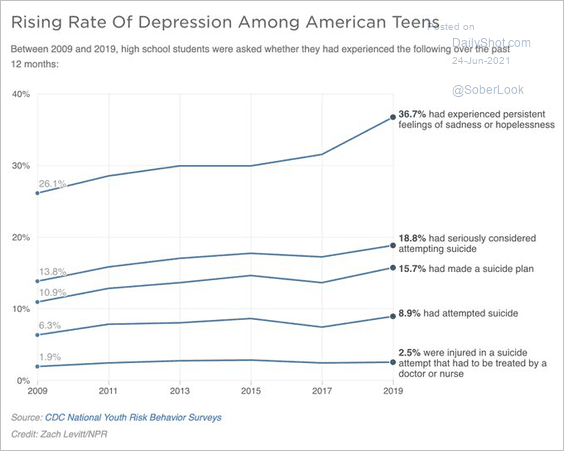
Como bien lo apunta Jonathan Haidt ¿Qué fue lo que cambió en 2010 que empeoró significativamente la higiene mental del adolescente? El iPhone:
El objeto de un papá competente es desarrollar el caracter, no el ser equitativo. La libertad es la consecuencia de un caracter desarrolado. Esto lo esta haciendo APDE con el programa PRIMED.
Si a tu hijo le atrae el baseball, sentite dichoso. ¿Por qué? Por el fracaso.
En el beis, fallar 70% de las oportunidades a la ofensiva es un buen desempeño. Ty Cobb, con un promedio de bateo de 0.366 de por vida sostiene el mejor promedio de la historia.
El beis es un juego que en teoría no se puede ganar: La defensa tiene control del balon 100% del tiempo. Y la ofensiva sólo puede hacer contacto con la pelota (que es pequeña y se mueve rápidamente), usando únicamente un objeto redondo (bate)— es un ejercicio es sensatamente difícil. Por eso le encanta a los niños.
Agregando insulto al golpe, la inmensa mayoría de los coaches tienden a ser negativos y pesimistas. Lo dice Tom House, coach de Nolan Ryan, el pitcher con record de ponches (mas de 5 mil):
“… baseball becomes a game of failure, coached by negative people, in a misinformation enviroment. Authority figures try to make themeselves look good by pointing out how bad others are. Athetles are more often told and judged on wha they cannot do rather than enlighted and encouraged on what they can do.” — Tom House on Mental and Emotional Management
En el beis no es suficiente ser rápido o fuerte, porque aquí la victoria es para el que sabe gestionarse mentalmente frente a las desventajas, ya que aunque el jugador sea atlético, si la frustración (ponche, error, etc) son distractores muy grandes para su mente, entonces su atleticismo queda de adorno.
¿Y qué situación de la vida real más desventajada que la paternidad?
Cuandos los varones nos convertimos en papás, la vida nos da una autoridad sin competencia. Un dia experimentamos un orgasmo intenso y nueve meses después aparece esta criatura indefensa bajo nuestra protección. Ni siquiera sabemos cortar bien el cordón umbilical con esas tijeras raras, y ya somos el primer referente en la vida de este bebé. Y no basta la experiencia con el primer hijo, pues el segundo trae sus propios retos por ser una persona distinta, y asi sucesivamente. En la parternidad, como en el beis, nunca es suficiente.
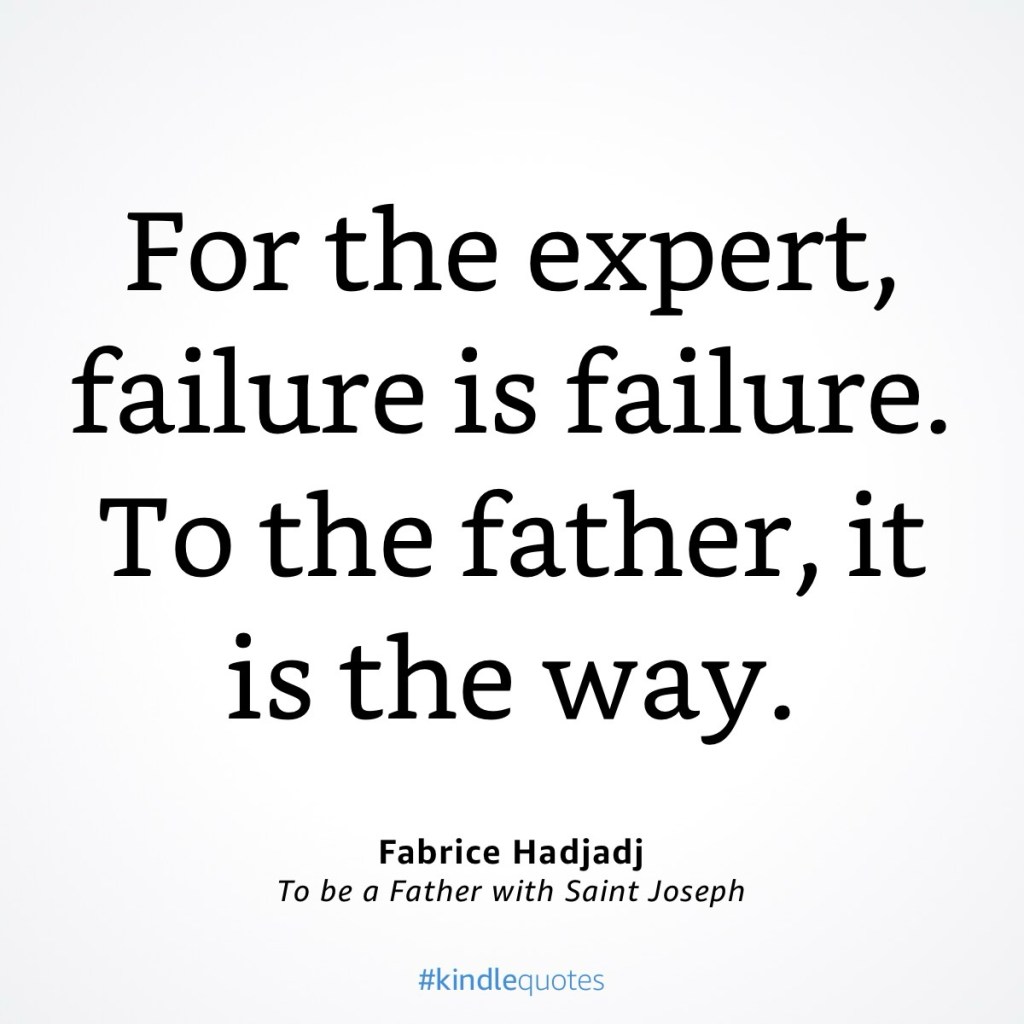
Por eso dice Fabrice Hadjaj:
Fabrice es filosofo, converso del ateísmo, es francés y tiene 10 hijos
Frente al hijo, si hubiera un papá perfecto, ya no seria papá. Sería un agente administrador porque un hombre sin limitaciones ni miserias frente a sus hijos es solo un funcionario o tutor pero no un padre, pues los hijos aprendemos especialmente de las debilidades de nuestro papá.
Aunque la reputación del fracaso es mala (pues tanto adoramos al éxito), en el beisbol, hay que usarlo como una maqueta de la vida real. El beis -muy similar a la vida- puede ser brutal y devastador, pero también puede obrar milagros en el conocimiento de nosotros mismos.
Empezando porque no somos inmortales. El hecho de que vayamos a morir es prueba de que algun dia enfretaremos ese “fracaso” fatal.
Es el fracaso, y no el éxito, el que reina soberanamente sobre todos nosotros: determina el funcionamiento de nuestra mente, la forma de nuestra vida, las circusntacias de nuestra andadura por el mundo.
Por lo tanto, el béisbol infantil, más que un deporte donde hay que ganar, es un juego que su experiencia nos proporciona una oportunidad para ver nuestra existencia sin filtros; un error o un ponche nos coloca en una situción excepional para comprender quienes somos y cuál es nuestro lugar en el mundo. Nos sirve para quitarnos el autoengaño del amor propio exagerado y nos vemos obligados a comprender qué somos con exactitud.
El fracaso es siempre nuevo, mientras que el exito, al multiplicarse, pierde todo interés.
El beis puede enseñar a amar la verdad más que a uno mismo.
Solo para los cristianos Dios es padre. Para los hebreos, el hecho de que Dios sea padre es solamente una metafora. Para los musulmantes es una herejia decir que Dios es padre.
Por otro lado, los deistas, como las sectas masonicas por ejemplo, creen en un gran arquitecto rechazando la revelación.
Para los cristianos, nuestra paternidad es la metáfora, y la paternidad verdadera es la de Dios padre.
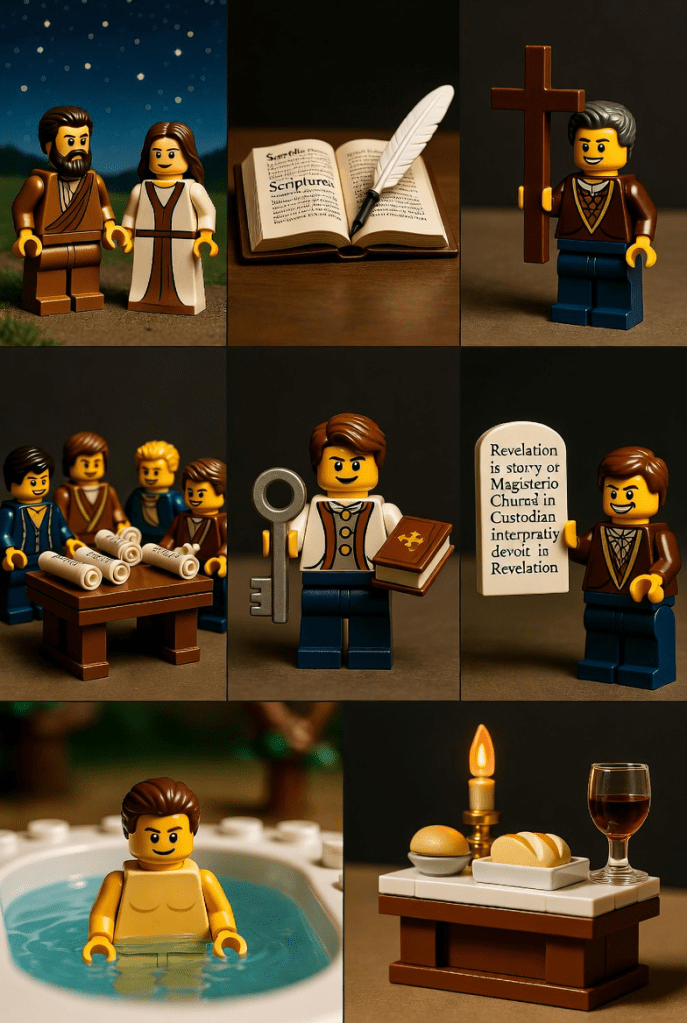
La Sagrada Escritura, testimonio de Revelacion
El primer (antiguo) testamento es la biblioteca que los primeros cristianos heredaron de Israel. Se pueden clasificar por genero literario como los sapiensales, los historicos, el pentateuco, el levitico. Todos ellos relacionados con la historia del pueblo hebreo.
Signo del agua en el batismo es un excelente ejmplo de la historia de la salvación.
La Revelacion como historia de la salvacion culminada en Cristo
Mas alla del trato teologico pastoral de la historia de la salvación, hay un enfoque muy importante para los papás. Me refiero a Abraham. Se ve que a Abraham no lo llamaron para “grandes cosas”. Apenas “solo” a ser padre. No fue sacerdote, tampoco general de ejercitos, nisiquiera profeta. Fue llamado simplemente a ser papá. Igual que nosotros.
Esto implica que la historia de la salvación es la primer gran herencia oral que hacemos a nuestros hijos. Es de los primeros ritos de adopción.
La transmisión de la Revelacion divina
Tradición: es la interpretacion y vivificacion de la palabra revelada en la Sagrada Escritura que viene desde los apostoles con la aprobación de Pedro. Una extension visible es la liturgia.
Los papas debemos ser los embajadores de nuestros hijos a la hora de la Misa, interpretando el significado de los colores, el tiempo liturgico, y especialmente la liturgia de la Palabra.
El Magisterio de la iglesia, custodio e intérprete autorizado de la Revelación y La inmutabilidad del depósito de la Revelación
¿Monopolio? Cada concilio que se ha celebrado, desde el concilio de Jerusalen, ha sido para afrontar alguna problematica o desacuerdo donde la tradicion busca una actualización. Un concilio cada 150 años. El primero, el de Jerusalen.
CONCLUSION
Al ir a misa, hay que ir preparado. Leer las lecturas de ese domingo, investigar la interpretación en linea con la Tradicion y adaptar ese mensaje revelado a uno mismo, y plantearlo de igual forma al hijo.
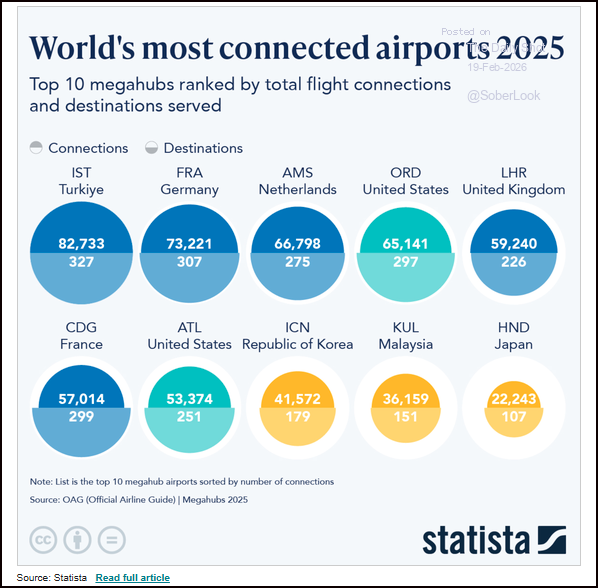
¿Qué tiene que ver un aeropuerto con la paternidad?
ORD: O’Hare — Chicago
El Aeropuerto de Chicago O’Hare se llama así en honor a un héroe de guerra: Edward “Butch” O’Hare. Este piloto aviador era hijo de un abogado que trabajaba para Al Capone, Edward Joseph O’Hare. Fue gracias a este abogado convertido en testigo que Al Capone pudo ser procesado por la justicia. Cuando Capone salio de prision, Edward Joseph O’Hare fue asesionado a balazos.
Su hijo, piloto aviador durante la segunda guerra mundial, al igual que su padre, se sacrificó heroicamente en un combate aero, razon por la cual han nombrado este aeropuerto con su apellido.
El trabajo del papá es revertir la siguiente rima:
Padre bodeguero, hijo caballero, nieto pordiosero.
O sea: se trata de romper el guion del exito. Talvez el papá no es quien da el nombre al recién nacido, pero es quien da la identidad.
Edward Joseph O’Hare quizás no era un buen ejemplo de papá. Vivió de mafioso y al final traicionó a sus colegas malhechores. Pero lo que lo pone en el mapa histórico es el viraje moral que en cierto momento se dio cuenta que había que hacer.
Hoy en la realidad hipermoderna los varones no necesitamos un viraje tan dramatico (talvez si, pero no la mayoria). El viraje esta en saber y querer ser hombre.
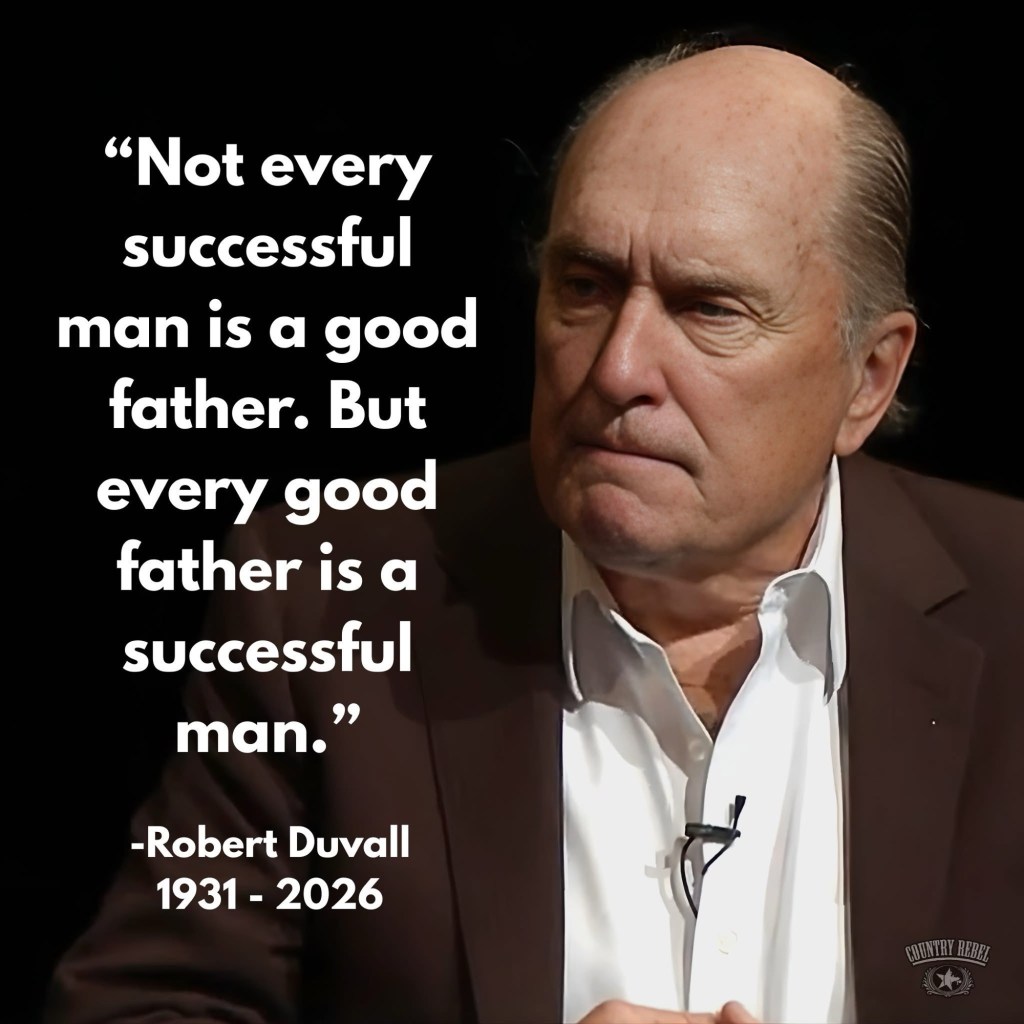
Como dijo el actor que la hizo de Tom Hagen en El Padrino:
La gran mayoria de psicologos y psiquiatras estan ocupados atendiendo sintomas por la ausencia de padre en su paciente. El aeropuerto de Chicago es un gran recordatorio de que nunca es tarde para cambiar y decidirse por ser varon y adoptar al hijo. El doc Cofino lo dice mejor: Siempre hay tiempo para cambiar, nunca es tarde para amar.
Despues de cinco años y 56,700 kilometros este carro llegó a su fin. Repararlo es inviable.
Muchas veces varios señores curiosos me preguntaron que si eso carros valen la pena. Tiene mala fama por su alto mantenimiento y su ineficiencia en el consumo de combustible. No faltó el pariente que opinó que era un carro demasiado grande y lujoso.
Este carro lo compramos en Q80k en Dic 2020. Para que recorriera esos 56 mil kilometros tuve que gastar Q103k en mano de obra y repuestos. Su hubiera comprado un carro nuevo koreano en 2020 el precio no bajaría de Q190k sin tomar encuenta los intereses y mantenimiento. Ademas, dudo que un carro “economico” habría protegido a mi esposa de su propia inprudencia como lo hizo este Land Rover. Ser economico no es gastar poquito. Lo realmente economico es producir el maximo con pocos recursos.
Usar un Land Rover no es para la mente cómoda. Se necesita tener cierta atracción hacia la incertidumbre y al descontrol. Un deseo de autenticidad e independencia para que al final haya que darse cuenta que lo que realmente se necesita es humildad.
Si alguien posee un Land Rover y espera que no falle mucho, es como quien compra una mascota y espera que esta nunca apeste y que se entrene solita.
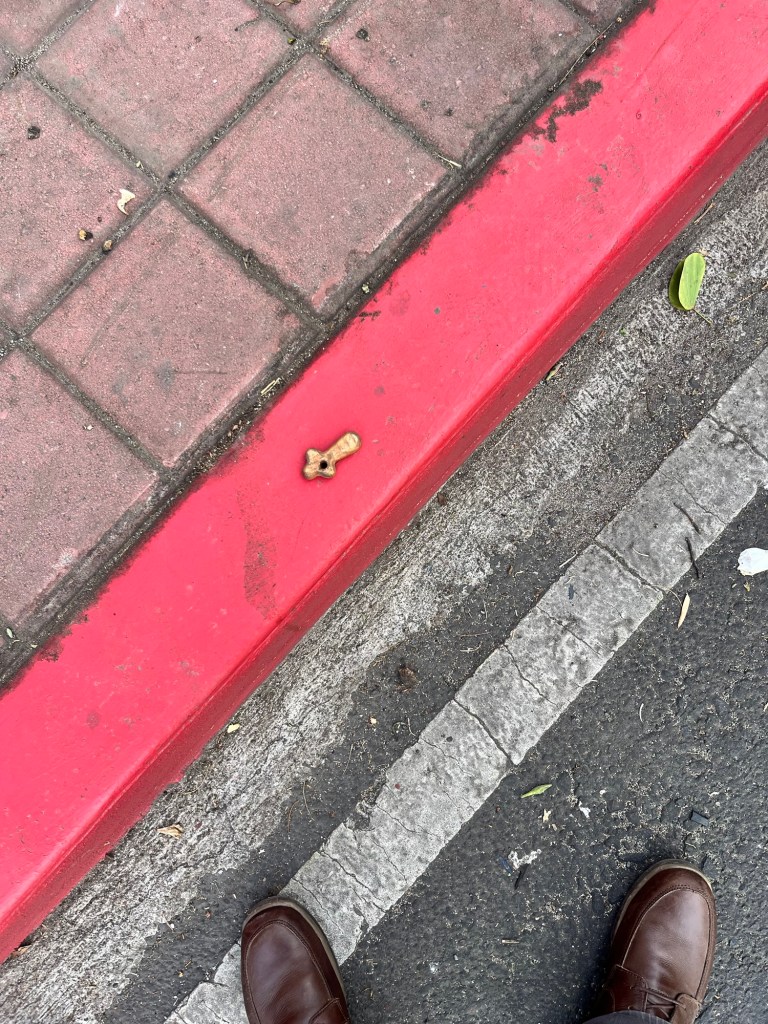
Fundamentalmente lo que salvó a mi esposa de este percance es una cadena de coincidencias que tiene su origen en comprar este vehículo, y pasa por tener una visión sobrenatural de las cosas más pequeñas y simples de la vida. Esta Cruz de palo de olivo traída desde Israel, es el mismo tipo de árbol que se menciona en el primer misterio doloroso, cuando Jesús se aparta a rezar. Esa Cruz la llevamos como un despertador en el carro.
De la innumerable cantidad de cosas que ese carro llevaba , el único objeto que salió volando fue esa Cruz de olivo. En el vehículo se transportaban (y nunca se bajaban) juguetes, libros, tarjetas de acceso a talanqueras, control remoto de portones, cargadores, cables, juegos de mesa, galletas, pañales, pelotas, ropa de cambio, crayones, basurero, hasta basinica. ¿Por que solo la cruz cayó en la banqueta?
¿Pero qué paso?
Miércoles, pasado el mediodía, viajando sola, el piloto se distrae y pierde el control del volante. Todos los daños son estrictamente materiales. Nadie sale golpeado, ni siquiera encontré testigos. A los minutos cuando yo llegué a conocer la situación, encuentro pedazos de los retrovisores en el suelo, vidrios polarizados rotos y un faldón tirado en el asfalto. Lo único que salió del vehículo fueron dos cosas: el cuerpo entero, sin rasguño, de mi esposa y esa cruz de palo de olivo.
Este evento sucedió el 28 de enero, el día que se celebra el día del teólogo en memoria de Santo Tomás de Aquino.
De ida olvidó la mesa grande — la importante. De regreso dejó la extensión de luz, conectada.
Mi hijo está vendiendo café y pizzas para financiar un viaje a Roma en octubre 2026. Es un proyecto de la capellanía de su colegio.
Esta es una pequeña reflexión.
Esto de “ir Roma” es como la estrella de belén. No es el fin en si mismo. Y creo que se parece al quinto misterio gozoso del Rosario: José (el caballero) y María (la inmaculada), pierden al hijo. En el mundo moderno podrían ser procesados por negligencia y abandono. Al final del texto dice “Ellos no comprendieron lo que les decía.” En eso puedo decir que me parezco a san José y santa María. En que no entiendo.
El sábado, en una oportunidad de vender café, Juandi cometió dos errores administrativos. Errores menores, pero escenciales en el buen servicio. Yo me enojé. Pensé en solucionarselo, rápido y de mal modo. Pero agarré mi ímpetu y lo teledirigí hacia Juandi dejándolo que él lo resolviera.
No solo si pudo vender, sino que además me demostró que mi modo de vender café no es el único.
Estos “problemas” fueron como tesoros encriptados en frustración porque también pude conversar de regreso en el carro con Juandi (para ir a traer la extensión olvidada)— cosas de altísimo valor. Cosas que si no se dicen en el contexto y tiempo correcto, pierden su fuerza.
La venta del sabado fue improvisada. Surgió en último momento, un dia antes.
Pero hace mucho tiempo que yo estaba buscando un momento para decirle lo orgulloso que me siento de él, sin que sonoara falso u ocasional (por buenas notas o por ganar un trofeo). Por ejemplo, decirle que su difunto abuelo estará muy feliz de verle vender café. Decirle que lo quiero por ser él, no por lo que hace o deja de hacer. Yo pensaba que esto sólo en un campamento en al lado de una fogata se podía lograr. Pero he aprendido que en medio de los problemas mundanos también es posible.
Ni el mejor curso de liderazgo te ofrece estos momentos de formación del caracter. Tampoco hay caso de ICEF donde yo sea protagonista y alumno simultáneamente. Me refiero a poder expresarle este afecto sincero mientras los dos aprendemos a trabajar bien — es lo que se llama capital intangible con capital tangible.
No veo como Juan Diego se pueda ir a Roma con sus propios medios. Pero en el camino se nos está juntando un caminante misterioso que nos está enseñando cosas impesables como esta anécdota que aquí termina.
En la pubertad, tuve varias veces uñas encarnadas en los pulgares del los pies. Aun siento vergüenza. Decidí que a mis hijos nunca les pasara esto. Asi que conseguí este “tip 2 toes”.
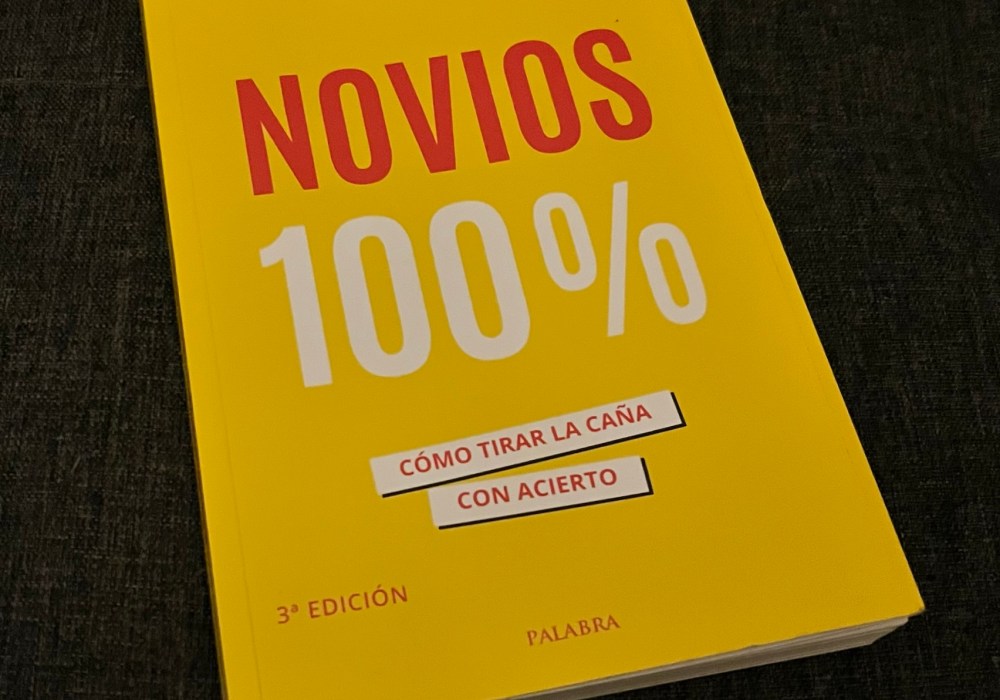
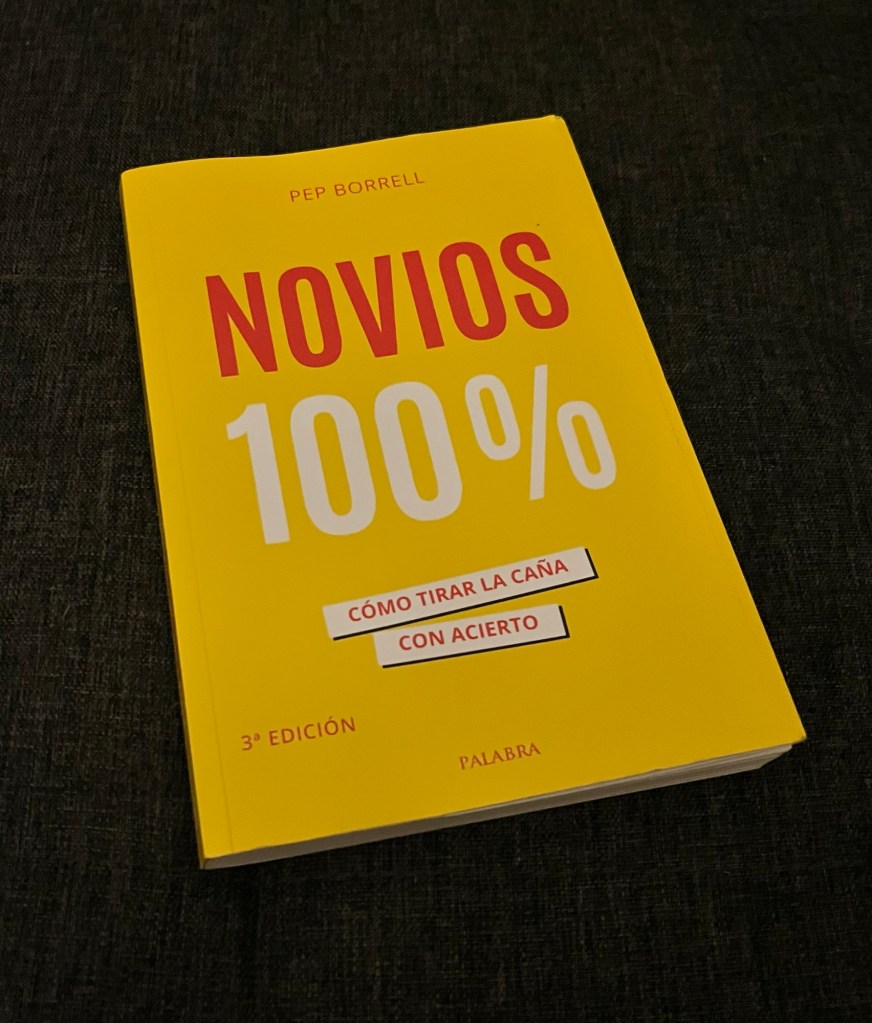
Hoy domingo a las 8pm me piden que les cortara porque ya les molestaba. Mientras me puse a trabajar con mi tip2toes kit, me recordé del libro que acabo de terminar: Novios 100% de Pep Borrel
Este libro lo he leído porque me interesa preveer otra panorama para mis hijos: el noviazgo. Yo no tuve novia hasta los 25 y llevamos 15 años de matrimonio. Hay cosas muy buenas por tomar esa decisión con siete meses de noviazgo y cosas que todavía puedo optimizar como esposo.
A mi me salió re-bien. O mejor dicho, el esfuerzo ha cosechado méritos. Majo y yo no tuvimos sexo genital hasta la noche bodas. De hecho, comenzamos a salir por un libro (La aventura de la Castidad – Dawn Eden) y a pesar de que el porno tuvo demasiado tiempo mi atencion, hoy me descubro casado con una guapa que siempre he deseado con todas mis ganas, y sus defectos, cuando salen, los transformo en ofrenda espiritual, de esa forma consigo hacerle el amor hasta cuando está enojada conmigo. Nada de esto garantiza armonía y felicidad perpetua. Pero le da carácter a la temporalidad.
La verdad fue idea de Majo comprar el libro. Ella la psicóloga y yo el practicante.
Conforme fui leyendo el libro descubro que el no haber tenido novia antes de los 25 años en realidad me ayudó para la decisión de montar una familia.
No estoy diciendo que es mala idea tener novia cuando uno es menor de 25. Pero si uno no sabe qué buscar en una relación sentimental, es mejor no perder el tiempo. Es como abrir una cuenta con un broker y esperar ganar dinero “jugando” la bolsa. Eso no es invertir, eso es coquetear con la ludopatía.
Hay que tener un politica personal de inversión. Y no solo para los instrumentos financieros. También para el corazón.
En parte me ayudó que soy el hijo menor de 5 hijos, cuatro mujeres. Vivir con 4 hermanas hizo que desde que tengo memoria vengo oyendo cómo las mujeres procesan las relaciones sentimentales. Y aunque ni así logro entender el cerebro femenino (ni lo pretendo), si que tomé nota de por dónde irme a la hora de andar sentimentalmente comprometido. Pep lo dice mucho mejor:
Mas vale estar toda la vida soltero queriendo estar casado que estar casado queriendo estar soltero.
Con Majo, al mes #7 de novios nos fuimos a un retiro prematrimonial. Encuentro Católico para Novios. La mayoría de participantes iban con la boda armada. Nosotros no sabíamos si al salir del retiro talvez mejor nos dejamos o agarrábamos el camino de la vocación. Al final funcionó. O mejor dicho, la voluntad de Dios estaba clara.
Concluyendo, las relaciones son como el béisbol. Solo a una se le hace swing y entra en juego. El noviazgo es due dilligence — lo que se hace antes de comprar una empresa atractiva; crecimiento inorganico. En esta etapa la transacción es pública y todavía se puede deshacer el negocio, y es normal. Se investiga todo, pero nunca se asume control de las operaciones (el equivalente de hablar mucho y tocarnos poco) hasta que ambas partes formalizan la transacción.
Al igual que en el diamante de beis, si no estas dispuesto a sufrir, no estas preparado para amar.
Uno se no se casa porque ama, se casa para amar aun más, de hecho con el alma entera a través del cuerpo.
Ojalá este libro lo leyeramos los papás de los adolescentes contemporáneos. No solo nos puede ayudar a orientar mejor, talvez hasta nos sirve para nosotros mismos como esposos.
Y como dice Pep, lo bueno del noviazgo es que si ves que si por ahí no es, a la PUERTA.
El libro está en la tienda de la iglesia en Cayala. Te lo pueden enviar.
El profe Edgar Casados, asesor de Juandi en 2025, nos recomendó leer el libro Virtuous Leadership de Alexandre Havard y he descubierto una conexión con el mago de Omaha, Warren Buffett.
Buffett se retiró oficialmente el 31 diciembre 2025 y en el mundo especultaivo salieron memorias como la siguiente:
Pantallazo de una story de instagram del 31 diciembre 2025
A continuación una serie de apuntes del libro de A. Havard. Yo quisiera vivir esas palabras, por eso las transcribo:
Un lider rechaza el enfoque utilitarista hacia la virtud. La virtud es excelencia en el ser, no excelencia en el hacer.
Los negocios son un vehiculo para encontrar grandeza personal y organizacional. Se trata de lograr algo valioso y noble junto con otras personas.
Por ejemplo: Francois Michelin.
La familia no es el medio para cumplir deseos egoistas — comer bien, ropa limpia, quitarse la soledad, ganar respeto social. Es una vocación de sacrificarse por otros.
El liderazgo no es una técnica. No se trata de hacer bien las cosas sino de hacer lo correcto. En ingles es mas claro:
It’s not about doing things right but about doing the right things.
Los eunucos modernos seran reemplazados por la inteligencia artificial porque el único trabajo no automatizable es desarrollar el caracter. Un eunuco moderno es un individuo que busca controlar a los demas porque no se puede controlar él mismo.
La verdadera especulacion es la “prudencia” porque en latin prudentia viene de providencia que en ingles se entiende como “foresight”.
Sofocar el miedo es tambien sofocar el coraje. Solo alguien prudente y justo puede ser valiente porque la virtud supone pasión. Por lo tanto,
Hay que tener el coraje de buscar la excelencia. Es inprudente no apuntar a la excelencia. Hay que conseguir la humilidad del auto-control.
El carácter es lo que te queda cuando estas en bancarrota. Liderazo es carácter.
El año empezó Miercoles 01 enero y ha terminado Miércoles 31 diciembre. En cuanto a días de la semana, la mayoría de años comienzan y termina el mismo día, pero ¿miércoles? sólo ha pasado catorce veces desde 1925. Y en mis primeros 40 años, seis.
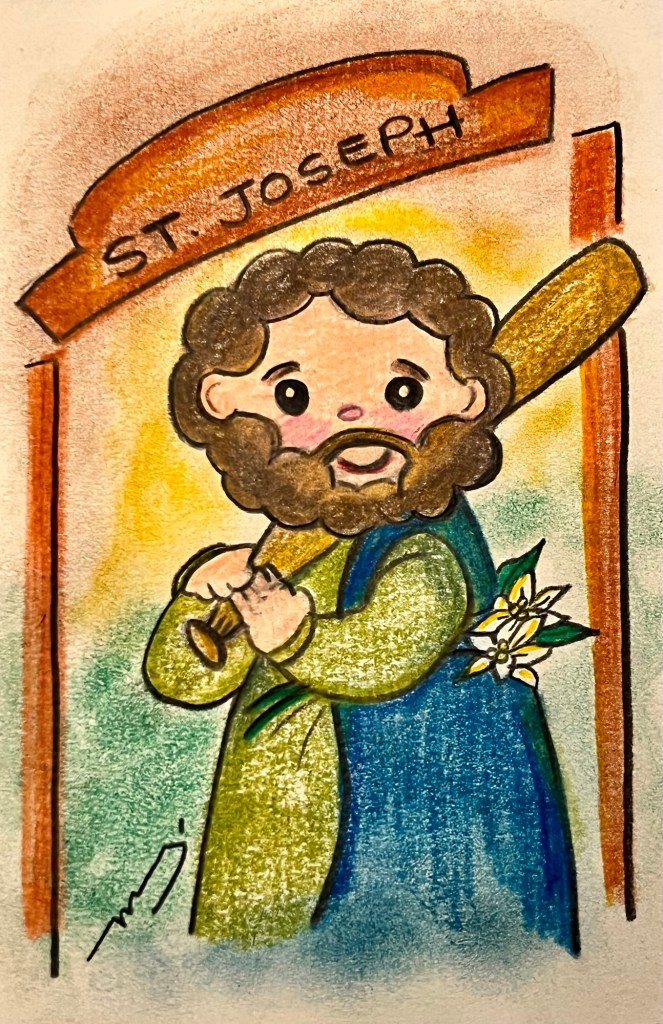
En la tradición cristiana los dias de la semana estan dedicados a ciertas devociones. Por ejemplo el domingo a la Resurreccion de Jesus, lunes a las almas del purgatorio, martes a los Angeles, jueves a la Eucaristia, viernes la pasion de Cristo, sabado nuestra Señora. Y los miércoles son de San José.
Dibjo hecho por Majo mi esposa bajo mi encargo por mi cumpleaños 40. Es san José en su turno al bat. La oración es el bate y el diablo es el pitcher.
En 2025 en nuestro hogar Joachin Godoy casi todos los aparatos se arruinaron: la lavadora de ropa, los dos carros, la TV principal, el molino de café, la refrigeradora, la bicicleta, la Roomba. Como dice el filósofo Costica Badatan, resulta que construimos tantas máquinas para resolver tantos problemas que acabamos trabjando para ellas todo el tiempo. Entre las complicaciones materiales hay una más grande que aquí no cabe poner y que cuando se resuelva lo contaré con detalle. Este tipo de complicaciones pueden ayudar a formar un respeto desinteresado por la realidad — humildad. Citando al rabino y lord Jonathan Sacks, la humildad es una de las virtudes que mas amplian y mejoran la vida.
Ademas, este 2025 tambien es el año en que murió mi papa. Afectivamente, fue como un abandono. Antropologicamente, una aclaración ontológica. Espiritualmete, un acelerador de la filiación divina.
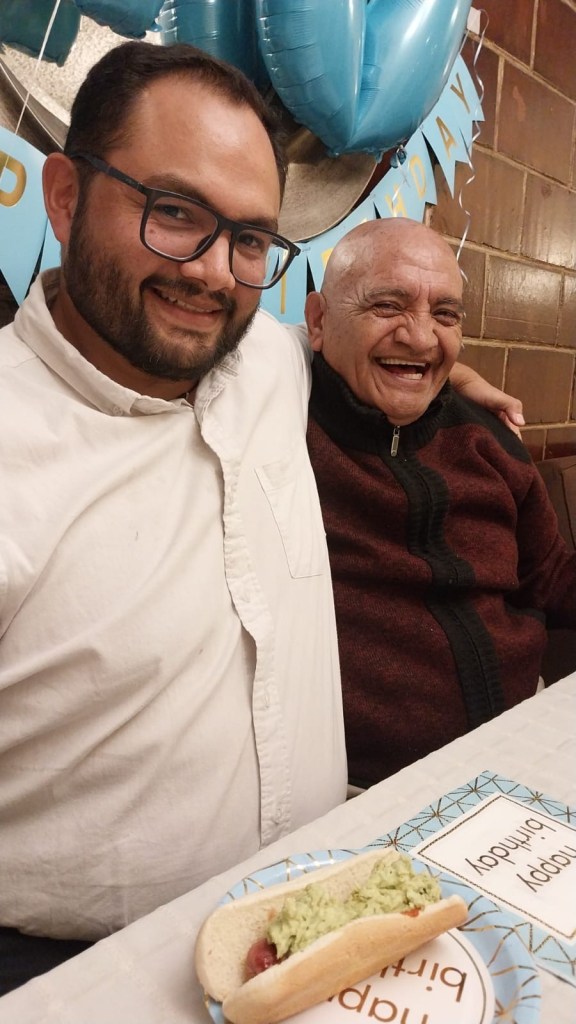
Cumpleaños 40 con mi papá en mi casa. Nunca lo vi tan tranquilo como lo vi en la morgue.
Lo más valioso intelectualmente hablando de este 2025 ha sido aprender del tema del carácter. Ivan C. me regaló un muy buen libro para mi cumpleaños: Father the Family Protector, de James Stenson, co-fundador de Washington Heights y numerario del Opus Dei. Este libro ha venido a perfeccionar mi estilo de educación de mis hijos, y ha venido a desafiar grandemente mi calidad de esposo.
Esto me llevó a conocer a Pep Borrel, no sólo en sus libros, tambien personalmente. Este odontólogo padre de cinco hijos es, diría yo, un investigador sistemático de la teología sacramental del Matrimonio. No solo es posible ser un esposo competente, sino que me comprometí a serlo en el escrutinio afirmado el 26 de noviembre 2011 en nuestra boda.
Estas gracias individuales son todo patrocinio de San Jose, a quien me consagré el 01 de agosto de 2024, un año antes de la muerte de mi papá terrenal.
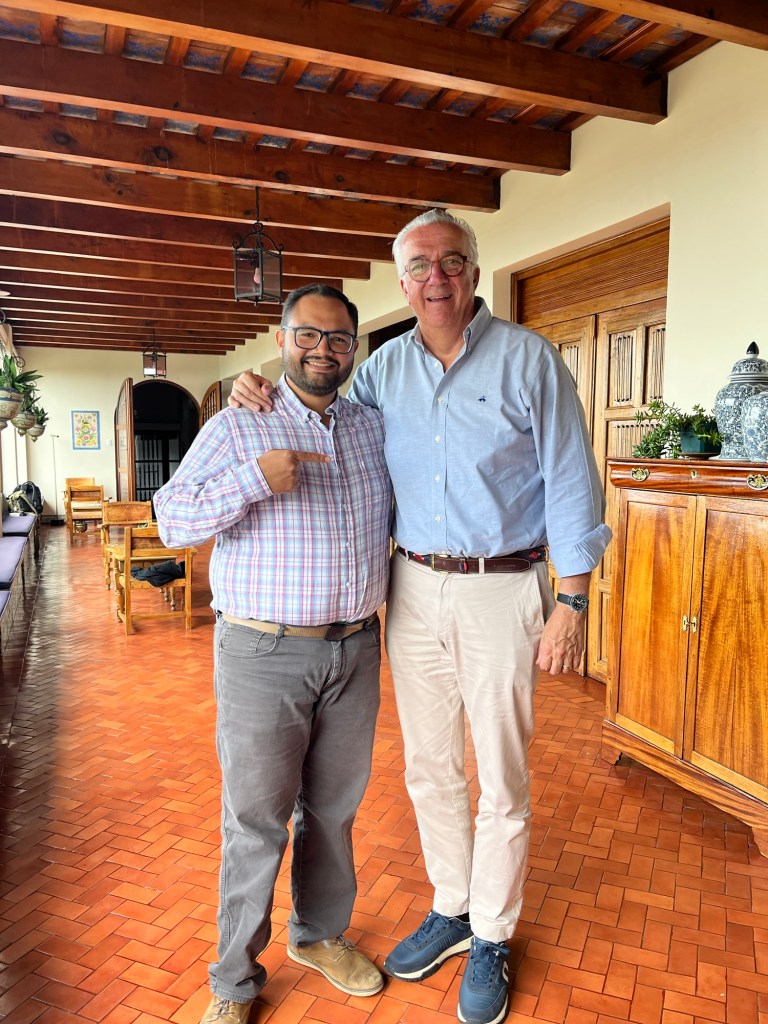
Foto: Diego Joachin y Pep Borrel. La foto la tomó Mercé su esposa. Agosto 2025, Altavista.
La próxima vez que el año comience y termine en miercoles será cuando con mi esposa tengamos 46 años en el 2031. Mis hijos tendrían 19, 15 y 9. Yo debería tener un cuerpo mas digno de mi condicion de hijo de Dios, y estar aun mas enamorado de Maria Jose.
Vista desde mi lugar de trabajo en la oficina que nos presta Guise en Dist. Miraflores, en la terraza del edificio. Atardecer de enero 2025.
Así como san José formó el caracter de Jesus y tambien ha sido el salvador del salvador (deHerodes), su influencia en el cielo es inferior solamente a la virgen María. Además de ser mi padre y señor, ahora conspira con mi padre terrenal quien, a lo menos, está en el purgatorio e intercede como siempre la hecho.
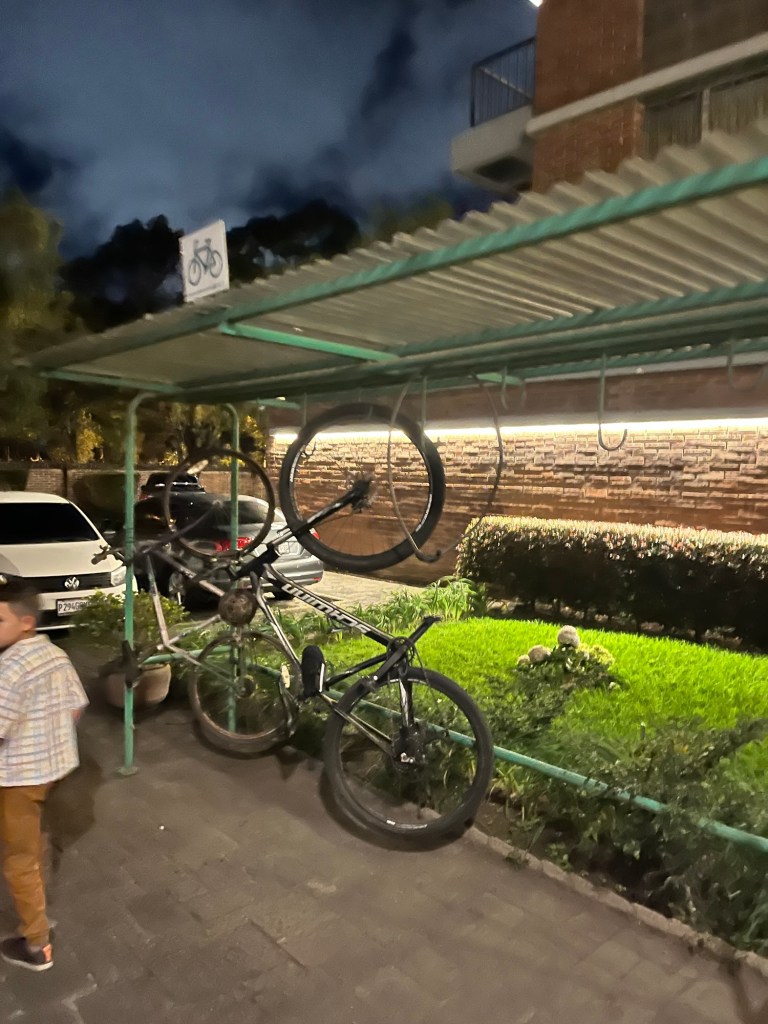
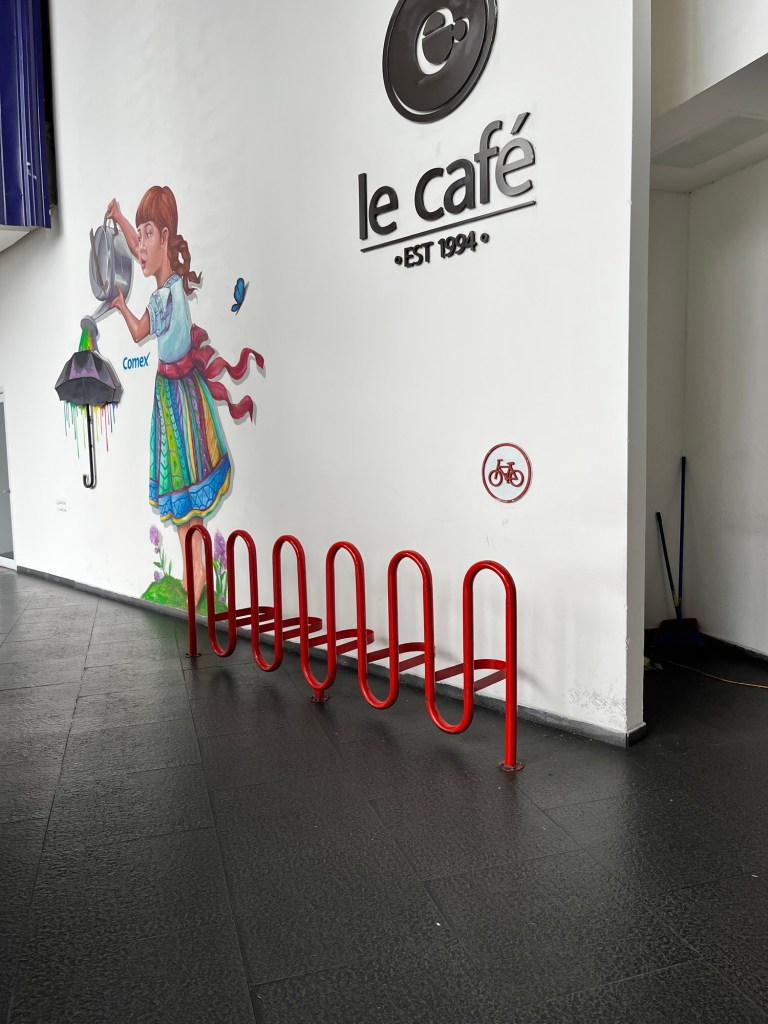
Esto es una muestra de las posibilidades de estacionamiento de bicicletas que existen en la ciudad de Guatemala. Los extranjeros que visitan Guatemala, todos, reconocen que es el trafico mas lento que han visto.
El hecho de que hayan mas motocicletas que carros es solo la solución privada contra este problema social.
Lo verdaderamente sano, es usar bicicleta no solo como deporte, tambien como transporte de diario.
Residencia universitaria, ciudad vieja. Zona 11 las Charcas. 
Prominente, restaurante en centro comercial en la Aguilar Batres, zona 11 
Entrada peatonal en Miraflores,, zona 11 
Sótano uno del condominio Torres Géminis zona 10. Ellos cobran Q150 al mes por el derecho a utilizar este estacionamiento.











 Mkt Student