Swing and blogging

I feel that I can’t resume my market thoughts so often like other traders. I know I am no a full time trader, but I see markets all the time.


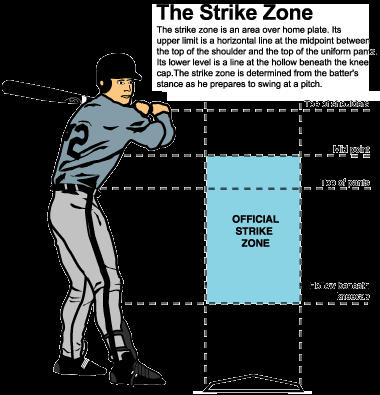
By now I am in a situation like I was in the batting practice two weeks ago: when it came the second turn take 24 swings in the batting cage, bi the 5th swing I couldn’t continue as solid as the other contacts with the ball. I couldn’t move the arms and the shoulders to meet the ball with my momentum because of lack of energy.


Same here at blogging. I need more conditioning in both sides of this speculative life. The curious thing here is the role that alimentation has: A good eating system will create good opportunities for both developing the physical conditioning for a decent batting practice and for a vividly experience in the market’s sessions.


Wishful thinking in the Euro

A couple of good friends, from my “eco” group, requested me to do all the paper work for opening a forex account. I suppose to design the strategy and show them what I got when I finished. They wanted to start with US$200. In part this is what made to stood still and do nothing.

If I had opened the account I would have gone long the euro back then on July 09. Buy at 1.4150 and today the mark to market is 1.4565, discretional trading. But I would look for a weekly positional strategy.


Although the average daily volatility would have squeeze the $200, I have this feeling of frustration for not getting long in that long term rally.

BUT

1) I don’t have the amount of $ for establishing a positional system [taking that volatility].

2) I am focusing on scalping the Oil. Either with USO or long in-the-money-options in the futures.

3) I really have no more space in my daily agenda for deepening in market study. I think this will be possible about the end of 2010.


4) For now, I rather build the sources that feed the trading account and do research in the mean time.


image

Peeking oil volatility

We are currently studding a strategy for CL. Basically it says that if the percentage change in the 22d relative ATR is lower than –3% then a short position must be executed at the close of the session and buy it back at the close of the next day. Also if the percentage is higher than +3% then long position must be established at the close of the session and to be sold at the end of the next day.

So far we got a z-value of 2.8 without stop-loss using our data mine of daily CL prices since 1986. So far this 209 the overall return would be about 60% with a draw down of 20% in march.

What’s the next step?

1) try another percentage changes like four, five and so on.

2) add an stop loss to the system itself for smoothing the draw downs.

3) paper trade it for at least one week.

What about coffee

When I began to write this post I was about to say that coffee is more volatile from the rest of the markets I follow. But then I thought “before thinking about this, I should rank the relative ATR for this mkts”. Here is what we have:


 imageimage


Coffee is not the most volatile commodity among my tickers. Basically those are energies like NG and CL… and sugar. NG is almost double KC’s average true range related to the last closing price.


There is a little opportunity here: We have upward potential for 5 and twenty two days with a z value of two and 47% and 35% probability of loss respectively. But the expected value are too short: 1% for the 5 day strategy and 4% for the 22day. This is not based on ATR but in an indicator, which I was learned a couple of semesters ago, named Location which basically measures how away is the last price from its trends resumed by long term moving averages.


Also I want to see the Options. And we have this:

One month ago from this post the call/put ratio was 1.94 and today it is 1.90. No difference you may say. But the open interest dropped 53%. There was 83k calls in the beginning of august and 42k puts.


image


So in options we have the same “expected” scenario but with lesser voters willing to risk their capital supporting this.


Apparently in KC the bid call indicador [email me if want to know about this at joachin[at]ufm.edu] the singal is a reversal because we have had call weight but puts’ levels are closer to reality.

What if we sell some calls at 160 and sell some puts at 112 in the Z month? Let us paper trade it.

Three nice weeks – time to reOrganize


HPIM3769photo 


In the past weeks I visited Tlaxcala, Mexico and Chicago. The left picture is of a paint of 10 feet high of a market day about 700 years ago. Back then ‘traders’ organized themselves by trading commodities in different locations. Just the same way the SP500 is traded 30 feet away of the ten year bond markets.


Both trips to Mexico and Chicago were grate experiences in personal, spiritual and speculative terms. I met Dr Brett Steenbarger, I touched the floor of the pits, I met floor brokers as well as electronic brokers making currency hedges for balance sheets of $50million. I went to two yankee games and a week later in Mexico I met about 100 young persons like me that are building the civilization of love trough our Catholic Church.


photo3 I thank the lord for facilitating such grate opportunities. I hope to create a return for each lesson learned.

Baseball and mkts from Niederhoffer’s specs

I was in the US embassy trying to get my visa and as a distraction I was reading Vic Niederhoffer’s “Practical Speculation”. I found a suggestion why I like so much baseball and markets.


page 245:

At a 2001 Yankee Playoff game co-announced by New York Governor George Pataki, it was mentioned as a matter of routine that a certain batter had the third hightest percentage of foul balls per pitch with two outs during playoffs of all American League players. If only market practitioners were to keep at their fingertips one-thousandth of that kind of knowledge abut the picks of their favorite analysts – returns to be anticipated, winning streaks, balls, strikes and so on- the market would be a far more sensible and profitable place.


Maybe facebook can help finding patterns among these analysts.